ラベル 科学 の投稿を表示しています。 すべての投稿を表示

2016/07/06

いよいよ3名のエクスペディション第48-49次メンバーの打ち上げ当日!


NASA
Posted on  by .

いよいよ3名のエクスペディション第48-49次メンバーの打ち上げ当日!


Launch Day Arrives for Three Expedition 48-49 Crew Members

ついに日本時間、今日10時36分に日本宇宙飛行士、大西卓哉さんたちを乗せたソユーズの打ち上げがカザフスタンのバイコヌール宇宙基地で行われます。このブログのインスタグラムのアカウントでは打ち上げ実況中継も行う予定ですので(システム障害が多いので多少時間差があるかもしれませんが)是非お楽しみに!!!

Posted on July 6, 2016 at 10:50 am by Mark Garcia.
Leave a reply
カザフスタン、バイコヌール宇宙基地ホテルでの記者会見にて、左からエクスペディション第48-49次メンバーケイト・ルーベンス、アナトリー・イヴァニシン、そして大西卓哉。(NASA)
(From left) Expedition 48-49 crew members Kate Rubins, Anatoly Ivanishin and Takuya Onishi pose for a group photograph following the crew press conference at the Cosmonaut Hotel in Baikonur, Kazakhstan. Photo Credit: (NASA/Bill Ingalls)

カザフスタンのバイコヌール宇宙基地にて、NASAの宇宙飛行士ケイト・ルービンス、コスモノート(露宇宙飛行士)のアナトリー・イヴァニシン、そしてJAXAの大西卓哉が国際宇宙ステーションに向けての発射準備を進めています。
ソユーズの打ち上げ予定時刻は日本時間午前10時36分(カザフスタン、バイコヌール時間午前7時36分)となります。
この3人の乗組員たちは約4ヶ月を過ごし、10月に地球に帰還します。
At the Baikonur Cosmodrome in Kazakhstan, NASA astronaut Kate Rubins, cosmonaut Anatoly Ivanishin of the Russian space agency Roscosmos, and astronaut Takuya Onishi of the Japan Aerospace Exploration Agency (JAXA) are preparing for launch to the International Space Station. They are scheduled to lift off in a Soyuz spacecraft today at 9:36 p.m. EDT (7:36 a.m. Baikonur time, July 7). All three will spend approximately four months on the orbital complex, returning to Earth in October.

日本時間午前9時30分から、NASAテレビのサイトにて打ち上げの生中継と再放送をします。
Live launch coverage will begin at 8:30 p.m. EDT on NASA Television and the agency’s website. For the NASA TV schedule and where to watch live and replays, visit: http://www.nasa.gov/multimedia/nasatv/

この3名はエクスペディション48次の司令官でNASAのジェフ・ウィリアムス、ロシア宇宙飛行士フライトエンジニアのオレグ・スクリポチカとアレクセ・オプチニンと合流します。このエクスペディション48次の乗組員は約4ヶ月間を生物学、地球科学、臨床試験、物理化学、技術促進などの分野におけるのべ250以上の実験を行います。
The three will join Expedition 48 Commander Jeff Williams of NASA and Flight Engineers Oleg Skripochka and Alexey Ovchinin of Roscosmos. The Expedition 48 crew members will spend four months contributing to more than 250 experiments in fields such as biology, Earth science, human research, physical sciences and technology development.

またNASAテレビにて日本時間の7月9日(土)正午12時30分から、午後1時12分のラスヴェットモジュールへのドッキング、午後3時50分予定のソユーズの扉の開放などが始まります。
NASA TV coverage will begin at 11:30 p.m. Friday, July 8 for docking to the space station’s Rassvet module at 12:12 a.m. Saturday, July 9. Hatches are scheduled to open about 2:50 a.m. Saturday, July 9, with NASA TV coverage resuming at 2:30 a.m.

2016/05/01

ハッブル宇宙望遠鏡から覗く、夜空に隠された銀河

NASA 
April 29, 2016

ハッブル宇宙望遠鏡から覗く、夜空に隠された銀河

 毎日宇宙関連記事を読んでいますが、初めて低表面輝度銀河という言葉を目にしたので、先ほど投稿したNASAの週末からの詳細記事第一弾はこの夜空に隠れた銀河のお話しにしました。

イメージからも分かるように、我々の天の川銀河やアンドロメダ銀河と比べようがないほど希薄で、海原というよりは池や湖を眺めているかのような静かさがよく分かります。

さて、このごく最近発見された銀河は、まさに今世界中の天文学者たちが血眼になって探しているあの物質がこの低表面輝度銀河の主要構成物質だろうと考えられているため、注目を集めています。それにしてもこの宇宙の85%が未知の物質で構成されているなんてまったく不思議な気分にさせてくれます。


Hubble image of galaxy UGC 477


NASAとESA(欧州宇宙機関)のハッブル宇宙望遠鏡が、11億光年離れたうお座に位置するこの限りなく美しいUGC477のイメージを捕らえました。
This striking NASA/ESA Hubble Space Telescope image captures the galaxy UGC 477, located just over 110 million light-years away in the constellation of Pisces (The Fish).
UGC477は低表面輝度銀河(LSB)です。まず1976年にマイク・ディズニーによって提案され、1986年にこの低表面輝度銀河の存在がマリン1銀河の発見によって証明されました。このUGC477銀河のような低表面輝度銀河はアンドロメダ銀河や天の川銀河よりももっと散らばったところに分布します。夜空よりも250倍も薄暗いため、このような銀河は発見するのが極めて困難となります。
UGC 477 is a low surface brightness (LSB) galaxy. First proposed in 1976 by Mike Disney, the existence of LSB galaxies was confirmed only in 1986 with the discovery of Malin 1. LSB galaxies like UGC 477 are more diffusely distributed than galaxies such as Andromeda and the Milky Way. With surface brightnesses up to 250 times fainter than the night sky, these galaxies can be incredibly difficult to detect.
低表面輝度銀河の主要な物質は恒星ではなく(中性)水素ガスから成り立っています。一般的な渦巻銀河の中心部のバルジ(ふくらみ)とは異なり、低表面輝度銀河の中心部には多くの恒星が含まれていません。天文学者たちは低表面輝度銀河がたいてい他の銀河が存在しないエリアに分布するからであり、したがって、星形成の引き金となるような他の銀河との潮汐相互作用や融合がほとんどないのです。
Most of the matter present in LSB galaxies is in the form of hydrogen gas, rather than stars. Unlike the bulges of normal spiral galaxies, the centers of LSB galaxies do not contain large numbers of stars. Astronomers suspect that this is because LSB galaxies are mainly found in regions devoid of other galaxies, and have therefore experienced fewer galactic interactions and mergers capable of triggering high rates of star formation.
UGC477のような低表面輝度銀河は、主に暗黒物質によって形成されているだろうという見解だけでなく、それどころかはるかにとらえどころのない物質への理解を深めることが出来る素晴らしい題材となりうるのです。しかしながら、この銀河の薄暗さという露出の少なさのせいで、比較的最近になってようやくこの銀河の重要性が見出されてきたのです。
LSB galaxies such as UGC 477 instead appear to be dominated by dark matter, making them excellent objects to study to further our understanding of this elusive substance. However, due to an underrepresentation in galactic surveys — caused by their characteristic low brightness — their importance has only been realized relatively recently.
Text credit: European Space Agency
Image credit: ESA/Hubble & NASA, Acknowledgement: Judy Schmidt
Last Updated: April 29, 2016
Editor: Ashley Morrow

2016/04/12

スペースX ファルコン9の驚異的な快挙


NPR

April 8, 20166:13 PM ET

http://www.npr.org/sections/thetwo-way/2016/04/08/473572033/spacex-rocket-lands-safely-on-a-ship-at-sea-for-the-first-time?sc=17&f=1001

 こんにちは。今日もまた宇宙関連の記事です。実は日本に帰国していた間につくばにあるJAXAに遊びに行ってきました。本当に楽しくてたのしくて鮮明に全てのことを覚えています。(でもJAXAリラックマが買えなくて悲しかったです。) その際にJAXA以前のロケット打ち上げ失敗の苦々しいお話しなど当時の関係者の方々から直接お伺いたので、最近のJAXAの人工衛星のひとみ、スペースXの失敗で私まで気をもんでいた次第です。まずはNPRの記事には無いのですが、この驚異的なファルコン9の着水の動画をご覧ください。あまりにもすごすぎて私は何度も観直し、それでも感動してしまうのです。スペースXすごい!!!!!!!!宇宙産業のロマンに浸り、世界中のロケットサイエンティスト達に敬意を払う私です。


スペースXのロケットが海に浮かぶ船上に初めて着水を成功

SpaceX Rocket Lands Safely On A Ship At Sea For the First Time

The SpaceX Falcon 9 rocket lifts off from launch complex 40 at the Kennedy Space Center in Cape Canaveral, Fla., on Friday.
The SpaceX Falcon 9 rocket lifts off from launch complex 40 at the Kennedy Space Center
 in Cape Canaveral, Fla., on Friday.
John Raoux/AP
 金曜日がスペースXのファルコン9ロケットの記念すべき日となりました。ロケットは国際宇宙ステーションに新たに拡張可能な居住空間を搭載したカプセルを積んで宇宙に飛び立ちました。そして、ロケットの"ファーストステージ"が地球に戻り、着水しました・・・なんと今回は爆発せずに!
Friday was a landmark day for the SpaceX Falcon 9 rocket. It launched into space a resupply capsule bearing a new inflatable habitat for the International Space Station. Then the rocket's "first stage" returned to Earth for a sea landing — without exploding.
 スペースXのロケットは以前着陸には成功しましたが、前回の試みでは海上に浮かぶ船の上で大炎上をおこしてしまいました。
Though the SpaceX rocket had successfully landed on solid ground before, the last attempt to land the rocket on a barge at sea ended in a fiery crash.
「スペースXのファルコン9ロケットは宇宙ステーションに拡張可能な空間モジュールを運びました。NASAはこうした拡張可能な空間によって、将来宇宙飛行士たちを火星に送ることが出来ると考えています。」とNPRのゲオフ・ブルーンフィルがリポートしています。「ロケットの第二ステージがこの貨物を軌道に乗せ、そして第一ステージは前例の無い快挙を成し遂げました。まず方向転換してから、地球に戻ってきてそしてフロリダ沖に浮かぶドローン船上に垂直に着陸したのです。」
"The SpaceX Falcon 9 rocket lifted off, carrying an inflatable space module that will be added to the station. NASA hopes this kind of expandable room in space could someday help astronauts get to Mars," NPR's Geoff Brumfiel reports for our Newscast Unit. "As the rocket's second stage carried this cargo into orbit, the first stage did something unprecedented. It turned around, flew back to Earth and touched down vertically on a robotic barge floating off the coast of Florida."
 NPRのジョー・パルカの今週頭のレポートによれば、拡張可能な居住空間という考えは実は1990年代にまでさかのぼり、「宇宙機構は、どうやれば乗組員たちが火星に到着するまでの何ヶ月という期間を小さなカプセルで過ごし、気がおかしくなるのを避けられるだろうかと試行錯誤していました。_
As NPR's Joe Palca reported earlier this week, the idea for inflatable habitats in space dates back to the 1990s when "the space agency was trying to figure out how to get astronauts to Mars, without the crew going crazy living in a tiny capsule for months on end."
 畳まれた状態では182センチの正方形で、拡張すると「縦365センチ、横304センチとなるためキャンピングカー程の大きさになります」とジョーは言います。
When it's folded up, the expandable room is about 6 feet by 6 feet, Joe says, but when inflated, "it's about 12 feet by 10 feet, approximately the size of a small RV."
 この新しい住居は将来の火星への旅を快適な物にしてくれるということです。
The new habitat could mean more comfortable living during a future trip to Mars.
そして、スペースXのロケットの着陸成功は、スペースXが高価な第一ステージを再利用可能にしたことにより、将来宇宙旅行がもっと安価なものになるということなのです。とゲオフは語ります。
And the successful landing of the SpaceX rocket will mean much more affordable space travel, as SpaceX can reuse the expensive "first stage," Geoff says.

2015/08/13

ビル・ゲイツ、世界の衛生状況に着手する。

gatesnotes The blog of Bill Gates

Update: What Ever Happened to the Machine That Turns Feces Into Water?By Bill Gates | August 11, 2015


 常に世界が抱える大きな問題に着手するビル・ゲイツの最新のブログをピックアップしました。


アップデート:排泄物を水に変える機械に何が起こったのか?
Update: What Ever Happened to the Machine That Turns Feces Into Water?


 今年の始め、私は排泄物から出来た水を飲んでいる動画をシェアしました。(そして私の感想は・・・美味しかったです。)今日、セネガルのダカーにあるジャニキ・オムニ・プロセッサーJOPという水を生産する機械の実験プロジェクトは最終的に貧しい国々の人々の命を救い、病気を減らせるかもしれません。こちらが現場の最新アップデートです。
Earlier this year, I shared a video where I drank water made from feces. (My review: It was delicious.) Today the machine that produced the water, the Janicki Omni Processor—or JOP—is in Dakar, Senegal, as part of a pilot project that could ultimately save lives and reduce disease in poor countries. Here’s an update on where things stand:


 JOPが人の排泄物を飲み水や電気、そして灰にかえるということを思い出されたかもしれません。(これはオムニプロセッサーが人の排泄物を利用して価値ある物にするということはいくつか発展した箇所なのです。) 明確な理由があるため、飲み水に焦点を当てようとしています。しかしゴールは水の供給ではないのです。ゴールは貧困国の街の衛生状態を劇的に改善することなのです。
You may recall that the JOP takes human waste and turns it into drinking water, electricity, and ash. (It is actually one of several Omni Processors being developed that treat human waste and produce something of value.) It’s tempting to focus on the drinking water, for obvious reasons. But the goal is not to provide water. The goal is to dramatically improve sanitation for all the cities in poor countries.

 今日、少なくとも20億人の人々がきちんと流されないトイレや、とても不衛生な環境から起こった病気によって70万人もの子供が毎年命を落としています。残念なことに、裕福な国の解決策は貧困国には非常に高価な設備を必要とするため適さないのです。(どうこのシステムがダカーで運営され、JOPが適応してるかを見るために、このスライドショーを掲載します。) このオムニプロセッサーのデザインのアイディアの裏には、貧しい人たちが手ごろに公衆衛生を得られることにより問題を解決するという目的があるのです。
Today at least 2 billion people use latrines that aren’t properly drained, and diseases caused by poor sanitation kill some 700,000 children every year. Unfortunately, rich-world solutions aren’t feasible in poor countries—they require too much expensive infrastructure. (We put together this slideshow so you can see how the system works in Dakar today and how the JOP fits in.) The idea behind every Omni Processor design is to solve this problem by making sanitation affordable for the poor.

 技術的挑戦は私達のパートナーのJanicki bioenergy社の巧妙なデザインのおかげで、解決したと考えています。この機械の次のバージョンは排泄物に付け加えて、どんなゴミも燃やせ、維持が簡単など、テクノロジーはどんどんと良くなっていきます。ジャニキはセネガルで最初のJOPの販売の話し合いの最中であり、さらに彼らは購入の可能性のある裕福な国々とも話し合いをしています。
We think we have solved the big engineering challenges, thanks to ingenious design work by our partners Janicki Bioenergy. The technology just keeps getting better: The next version of the machine will burn most types of garbage in addition to human waste, and it will be easier to maintain. We also think we have a good business plan. Janicki is discussing the sale of the first JOP to a Senegalese company, and they’re talking to potential buyers in wealthier countries too.

 しかしながら非常に優れた技術力だけではビジネスプランとしては十分ではありません。機械は試験を受けなくてはならず、コンピュータープログラムと違い公衆衛生の機械はシアトルの机の上で試験をすることはできません。現実の世界には多くのことがあります。例えば、機械を稼動させるための適切な職員を見つけなくてはなりません。地元の人たちと、政府と協力し、そして世間の反応を的確に判断しなくてはなりません。
But business plans and brilliant engineering are not enough. The machine has to be tested—and unlike a computer program, sanitation machines can’t be tested from a desk in Seattle. The real world introduces lots of variables. For example, you have to find the right personnel to run the machine. You have to work with local and national governments and gauge the public’s reaction.

 この部門の一分野を学んでいるというのはすばらしいことです。今のところ、目の前にある結果は全て約束されています。JOPは予想通りに稼動しています。ダカーのパートナー達、特にナショナル・サニテーション・ユティリティー、ビデオを観ていただければ分かるように活気があり楽観的で、とてもよく働いています。例えば、チームはJOPが更に安価に小さくならないか方法を探しています。
So it is great that we are now on the learning curve with a unit in the field. So far, the results on all fronts have been promising. The JOP is working as predicted. The partners in Dakar, especially thenational sanitation utility, have been fantastic—you can see in the video how energetic and optimistic they are. At every step, we’re learning and will incorporate what we find in future designs and operating plans. For example, the team is still looking at ways to make the JOP cheaper and smaller.

 JOPに多くの技術が関与してからもう何年も経ちます。でもなぜ誰もその前にこの様な機械を作らなかったんでしょうか?テクノロジーを理解している人たちは、汚染された水を飲んで病気になったり亡くなったりすることはないということを知っていても、誰もそのことを知らなかったのです。また、この問題に着手したことによってどう利益を出すかということも知らないのです。これは典型的な市場の失敗といえます。
Much of the technology involved in the JOP has been around for years. So why hasn’t anyone built one before now? Because the people who understood the technology weren’t getting sick or dying from contaminated water, and they didn’t know anyone who was. Nor was it clear how they could make a profit by working on the problem. It was a classic market failure.

 現在、私達はビジネスプラン、熱烈な技術者チーム、国内のすばらしいパートナー、そして現在進行中の企画があります。私は本当に公衆衛生問題を解決する手段があると考えています。これは頭脳明晰な人たちが世界の大きな問題に着手すれば何が起こるかというとてもすばらしい例なのです。
Now we have a business plan, an impassioned team of engineers, great in-country partners, and a pilot project in motion. I think we have a real shot at solving the sanitation problem. This is a great example of what can happen when we get bright people focused on the world’s biggest problems.

2015/08/11

未来のコンコルド


I Fucking Love Science 

New Concorde Could Fly London To New York In One HourAugust 8, 2015 | by Caroline Reid

 心の中で密かに温めている、絶対に叶わないけれどやはり諦めたくない夢がいくつか子供のころからあるのですが、コンコルドに搭乗するというのはその夢のひとつでした。ですからこの記事を目にした瞬間非常に興奮してしまい、翻訳するのにまず自分を落ち着かせなくてはならないほどでした。見た目も最高に美しく、好奇心を煽るフォルムからスピード、コンコルドは世界でも憧れの的でしたが、更に進化したコンコルド2,0のスーパーソニックを超えた、ハイパーソニックな姿をお楽しみください。


最新のコンコルド、ロンドン-ニューヨーク間を1時間で飛行

New Concorde Could Fly London To New York In One Hour

August 8, 2015 | by Caroline Reid


photo credit: Artist's impression of the new hypersonic aircraft. PatentYogi/Youtube.


 空飛ぶ傑作・旧コンコルドはロンドン-ニューヨーク間をビューンと猛スピードで3時間30分で飛行していました。多くの人にとって音速よりも速い旅は夢にまで見る経験であり、従来の約7・8時間の半分という、どんなに強固な旅行者も歓喜とともに目が回るような飛行時間でした。航空機メーカーのエアバス社はこの夢の様な飛行機からインスピレーションを得て、次世代の高速旅の特許を取得しました。そして、この怪物は商業飛行において今まで考えられなかった速さと高度に達するでしょう。
The original Concorde, a flying masterpiece, could zip from London to New York in a breakneck 3 hours and 30 minutes. For many people, it was a dream to experience faster-than-sound travel, and the prospect of cutting the seven to eight hour journey to half the time was enough to make even the most robust traveler giddy with delight. Aircraft manufacturer Airbus has been taking inspiration from this flying dream, and they have now won a patent for the next stage in speedy travel. And this monster goes faster and higher than ever before seen in commercial air travel.

 一時間。それがこのコンコルド2.0という超高速飛行機・ハイパーソニック飛行機によるロンドンとニューヨーク間の飛行時間なのです。この新しい旅客機は音速4,5倍の速度、つまり旧型のコンコルドのマッハ2,5を超えてマッハ4,5の速度というで飛行します。
One hour. That's how long London to New York would take in the planned hypersonic plane, called the “Ultra-rapid air vehicle” but dubbed Concorde 2.0. This new passenger aircraft would fly at up to four and a half times the speed of sound, Mach 4.5, compared to up to Mach 2.5 for the original Concorde.

 コンコルドはには騒音公害という問題が2つありましたが、コンコルド2,0はそれらを解決できるだろうと願っています。大気圏中を音速より早く爆音を立てながらの飛行は非常にうるさく、あまりにもうるさすぎて人口密度の高いエリアでの飛行は破壊的な影響を及ぼすほどです。そのせいでそういったエリアではスピードを落とさなくてはならず、そもそものハイスピードという特徴を生かせなくなります。
Concorde ran into a couple of problems when it came to sound pollution that Concorde 2.0. hopes to solve. Blasting through the atmosphere faster than the speed of sound is a noisy business – so noisy that flying Concorde over populated areas was extremely disruptive. Often therefore having to fly slower in these areas, it couldn't quite live up to its high-speed potential.

 コンコルド2,0はそういった問題を避けるために、大気圏の上層部まで高く飛び、尾翼を回転することにより、騒音エネルギーを地球と平行に消散させます。旧コンコルドは高度1万8千メートル上空を飛んでいましたが、コンコルド2,0はそれを大きく上回り、約3万メートルと従来の約二倍の高さを飛ぶのです。
Concorde 2.0 will avoid these problems as it climbs high up into the atmosphere, dissipating its noise energy horizontal to Earth by rotating its tail fins. This way, the sound waves won't reach the ground. Where Concorde flew at around 18 kilometers (60,000 feet), Concorde 2.0. will eclipse that at around 30 kilometers (100,000 feet); nearly twice the altitude.


The original British Airways Concorde. Dean Morley/Flickr (CC BY-ND 2.0).
ブリティッシュエアウェイの元のコンコルド。
コンコルド2,0の乗客にとってはちょっとした宇宙への冒険の様なものです。機体はスペースシャトルの様に垂直に飛び立ちます。離陸後、ロケットのモーターが機体をジェットエンジンに切り替わるまでの高度まで打ち上げ、そして機体をハイパーソニックスピード(約マッハ5前後程の速さ)まで加速します。このジェットエンジンは旅客機というよりはミサイルに搭載されるものになります。
Passengers of Concorde 2.0 would be in for a bit of a space-like adventure. The plane takes off vertically just like a Space Shuttle. After takeoff, a rocket motor would shoot the plane high into the sky where the ramjets would take over and accelerate the aircraft to hypersonic speeds (loosely defined as around Mach 5). Ramjets are more commonly found on missiles than commercial aircrafts.

 離陸が垂直なため、乗客はハンモックのようなシートに座ることになるでしょう。そして、旧コンコルドの乗客数が100人だったのに比べ、コンコルド2,0はたったの20人ほどになります。
To take off vertically, passengers would have to sit in hammock-like seats. And, instead of the 100-passenger Concorde, the Concorde 2.0 would only carry 20 passengers.

 早速にでもこの乗り物のチケットを予約することは残念ながら出来ません。このプロジェクトは商業用として運行可能になるには30年から40年かかると予想されています。
Unfortunately, you're not going to be able to book a seat on this vehicle anytime soon. The project is predicted to take 30 to 40 years before it becomes a commercially viable form of travel.

 コンコルド2,0がどう稼動するかという将来的な情報はぜひビデオをご覧ください。
For further information on how Concorde 2.0 would work, check out the video below.


2015/08/06

透明なソーラーパネルによって窓や携帯が電力になるかもしれない

National Geographic 

See-Through Solar Could Turn Windows, Phones Into Power SourcesBy Marianne Lavelle, for National Geographic PUBLISHED AUGUST 05, 2015

 相変わらずですが、先日公表されたオバマ大統領によるエネルギー改革の延長です。アメリカ国内は相変わらず経済的癒着もあり、従来の石炭火力発電に依存するという意見が多いですが、その一方シリコンバレーでは卵から斬新な最新のテクノロジーが頭の覗かせています。


透明なソーラーパネルによって窓や携帯が電力になるかもしれない
See-Through Solar Could Turn Windows, Phones Into Power Sources

「これは全くもって新しいソーラーエネルギーです。」と新規事業のCEOは透明なソーラー電池を建物や電子機器に使用しようとしている。
"It's a whole new way of thinking about solar energy," says startup CEO about using transparent solar cells on buildings and electronics.

ユビキタス・エナジー社創業者のウラジミール・ブロヴィック(左)とマイルス・バー(右)は最終的に携帯電話や窓などの日常的な物に設置可能な電力供給出来る透明なソーラー電池を作っている。
Vladimir Bulovic (left) and Miles Barr (right), co-founders of Ubiquitous Energy, are making transparent solar cells that could eventually be placed on everyday objects such as phones and windows so these surfaces could produce energy. 
PHOTOGRAPH BY JUSTIN KNIGHT

 夏の南向きのオフィスで暑さにまいる思いをした人は、誰でも窓から降り注ぐその日光のエネルギーをご存知でしょう。
Anyone who has sweltered in a south-facing office during the summer knows the power of solar energy streaming through a window.

 実際、今日どんなに評判のいい建築家も日光のまぶしさや熱を下げる窓のオフィスのデザインはしていません。
In fact, no reputable urban architect today would design such a workspace without treated windows to reduce the sun's glare and heat.

 しかし、もし窓のコーティングが日光を遮断するよりもいいとしたらどうでしょう。もし、薄いフィルムが太陽光を得てオフィスの証明やパソコン、そして最も大切なエアコンの発電するとしたらどうでしょうか。
But what if the window coating could do better than keep out the sun? What if that thin film could capture the solar energy for lighting the office, running the computers, and best of all, firing up the air conditioning?

 それが20年にものぼるアメリカ政府のバックアップと大学の研究により、この新規企業がすぐにでも市場に出そうとしている「透明」な太陽光発電のアイディアの裏にあるのです。
That's the idea behind "transparent" solar, a technology that startup companies hope to bring to market soon, after at least two decades of U.S. government-backed and university research.

 有機化学の手助けによって、太陽光線を利用した先駆者たちが太陽光発電の一番の難題に取り組みました。現代社会において、太陽光はどの電力供給源の中でも最も大きな可能性がありますが、私達の装備では電力が限られてくるのです。太陽電池パネルを屋上に積み上げ、太陽光を電力にしても、20パーセントの効率しか得られないのです。
With the help of organic chemistry, transparent solar pioneers have set out to tackle one of solar energy's greatest frustrations. Although the sun has by far the largest potential of any energy resource available to civilization, our ability to harness that power is limited. Photovoltaic panels mounted on rooftops are at best 20 percent efficient at turning sunlight to electricity.

 時を越えて、研究によってその 効率は高まりました。しかし、科学者たちの中には、更に太陽光発電の利点を活用するならば、ほぼ完全に透明な太陽光発電で覆われた建物を増やす必要性があると議論しています。
Research has boosted solar panel efficiency over time. But some scientists argue that to truly take advantage of the sun's power, we also need to expand the amount of real estate that can be outfitted with solar, by making cells that are nearly or entirely see-through.

 「これは全く新しい太陽光エネルギーの考えで、多くの潜在的な設置場所があるからです。」とマサチューセッツ工科大学とミシガン州立大学から独立したシリコンバレーの新規会社ユビキタス・エナジー社の社長で創設者のマイルス・バー氏はこう話します。「あなたの想像を荒野に解き放たさせるのです。そうすれば、いずれどこでもそれを現実として目にするでしょう。」
"It's a whole new way of thinking about solar energy, because now you have a lot of potential surface area," says Miles Barr, chief executive and co-founder of Silicon Valley startup Ubiquitous Energy, a company spun off by researchers at Massachusetts Institute of Technology and Michigan State University. "You can let your imagination run wild. We see this eventually going virtually everywhere."

目に見えないスペクトルパワー
Invisible Spectrum Power

 目に見えない太陽光とは基本的に小学校で習った光のことです。太陽は目に見える光とともに、見えない紫外線と赤外線をエネルギーとして伝達します。太陽電池は基本的にスペクトルの末端で可視可能な光を捕らえるよう設計されているので、他の光は通り抜けてしまいます。ということは、透明になって現れるということです。
Transparent solar is based on a fact about light that is taught in elementary school: The sun transmits energy in the form of invisible ultraviolet and infrared light, as well as visible light. A solar cell that is engineered only to capture light from the invisible ends of the spectrum will allow all other light to pass through; in other words, it will appear transparent.

 有機化学はそういった物質を作り上げるための秘訣でした。単純なブロック辺の中にある炭素、水素、酸素やいくつかの物質は、地球上の全ての生命体から見つけられる物質であり、1990年初頭から科学者達は送電可能な分子配列の設計に取り組んできました。言い換えれば、電流の伝達です。
Organic chemistry is the secret to creating such material. Using just the simple building blocks of carbon, hydrogen, oxygen, and a few other elements found in all life on Earth, scientists since at least the early 1990s have been working on designing arrays of molecules that are able to transport electrons—in other words, to transmit electric current.

 「有機化学の美点は多種多様な物質があるということです。」コロラド州ゴールデン郡にある、米エネルギー省のNRELニコス・コピダキスは言います。「空が限界です。何にでもなるわけではありませんが、私達はある程度何が必要か把握しています。緑や青や他の色など目に見えるように設計するか、もしくは透明に設計すればいいのです。」
"The beauty of organic chemistry is there is a big variety of materials available," says Nikos Kopidakis, senior research scientist at the U.S. Department of Energy's National Renewable Energy Laboratory (NREL) in Golden, Colorado. "The sky's the limit. It can't be just anything, but we have a decent understanding of the requirements. You can design the material to look green to the eye, blue, any other color, or transparent."

 可視可能な太陽光をのみを収集するということは、効率性を犠牲にしているのです。なのでコピダキス氏のチームは可視可能な光を捕らえられる不透明な有機太陽電池の開発に集中し、そしてソーラーウィンドウテクノロジーというマレーシアの民間企業と共に透明な太陽光発電の研究をし、建物に使うアイディアを市場に出そうとしています。
Harvesting only the sun's invisible rays, however, means sacrificing efficiency. That's why Kopidakis says his team mainly focuses on creating opaque organic solar cells that also capture visible light, though they have worked on transparent solar with a small private company in Maryland called Solar Window Technologies that hopes to market the idea for buildings.

 ユビキタスエナジーのチームは米政府が援助する2011年のMIT科学者が出版した研究を形成する最適配合するのではと信じています。
Ubiquitous Energy's team believes it has hit on an optimal formulation that builds on U.S. government-supported research published by the MIT scientists in 2011.

 「だいたい透明性と効率性のレベルの間には矛盾点があります。」とバーは語ります。「私達のアプローチで、かなり透明なレベルでも著しくエネルギーを得ることが出来るようになりました。」
"There is generally a direct tradeoff between transparency and efficiency levels," says Barr. "With the approach we're taking, you can still get a significant amount of energy at high transparency levels."

 バー氏はユビキタスは今までより10パーセント以上の性能に到達し、シリコン以下だが、幅広く設置可能になると言います。「私達の周りには何百万平方キロメートルにも及ぶガラスがあります。」
Barr says that Ubiquitous is on track to achieve efficiency of more than 10 percent—less than silicon, but able to be installed more widely. "There are millions and millions of square meters of glass surfaces around us," says Barr.

有機である利点
Organic Advantage

 コピダキス氏は有機太陽光発電は従来型のシリカを高温の炉の中で石英砂を処理するシリコンのソーラーパネルを上回る利点があると言及しました。有機太陽光発電のコーティングを作る方のに低エネルギーで済みますし、一旦製造が進行すれば費用も格段に安くなります。
Kopidakis notes that organic solar has another advantage over conventional silicon solar panels, which typically are manufactured by treating the silica in quartz sand in a high-temperature furnace. It requires far less energy to make organic solar coatings, and should cost far less once manufacturing is underway.

 「高度に真空にされた部屋は必要ではありませんし、約150~205度まで温度を上げる必要もありません。」とコピダキス氏は言う。この太陽光発電の素材は、自然な温度下で普通のフィルムコーティングの工程で作られます。ユビキタスの技術者は人の髪の毛よりも千分の一の細さの有機光電池を構築している最中です。」
"You do not need an ultra-high-vacuum chamber, and you don't need to heat anything to 300 to 400 degrees," says Kopidakis. The solar material is deposited using a standard film coating process, all at ambient temperatures. Ubiquitous engineers are building organic photovoltaic structures 1,000 times thinner than a human hair.

 GMTリサーチの市場調査会社のシャイル・カーン上級副社長は、この工程にかかる費用の利点について今月始めにREddit "Ask Me Anything"で言及していました。しかし彼は、十分に確立され効率的な従来のパネルと市場で競った場合、透明の太陽光発電の会社が製造を増加するために十分な資金を得るのが厳しいのではないかと語ります。
Shayle Kann, senior vice president of GTM Research market research firm, noted the process cost advantage in a Reddit "Ask Me Anything" earlier this month. But he said may be hard for transparent solar companies to gain access to enough capital to ramp up manufacturing, when their product will be pitted against well-established, more efficient conventional panels.

 バー氏はまず小さな規模で技術を検証するのがユビキタスの企画だと語ります。カリフォルニア州、レイウッド市にある会社の製造準備施設では、モバイル機器メーカーと協力し、ユビキタスの技術を使ったスマートフォン、時計などの小さい電子機器のプロトタイプで研究しています。
Barr says Ubiquitous plans to prove its technology first on a small scale. The company's pilot production facility in Redwood City, California, is currently working with mobile device manufacturers to design prototype smartphones, watches, and other small electronics powered by Ubiquitous technology.

 「我々は電池の寿命を長くし、電池の寿命の問題を解決を提供することが入り口と考えています。」と語る。
"We think providing battery-life extension and solving battery life problems will be a very good entry point for us," he said.

 実際のところ、いつモバイル機器の透明な太陽光発電が可能になり、価格なども不明です。しかし、バー氏はユビキタスのチームはこの技術がモバイル機器の価格を著しく変えることはないといいます。そして、ソーラーパネルは新しい太陽光発電するスマートフォンではないのです。もし会社が思うようにいけば、目に見えない太陽光電池が電子機器の画面のガラスの下に組み込まれるのです。」
It's not yet certain when transparent solar-powered mobile devices will be available or what prices will be. But Barr says the Ubiquitous team doesn't expect the technology to change the cost of the mobile devices significantly. And don't look for a solar panel on your new sun-powered smartphone. If everything works out as the company hopes, the solar material will be an invisible coating under the glass over the device display.

「理想的には、」バー氏は語ります。「それはどんなもの物でもないのです。」
"Ideally," Barr said, "it doesn't look like anything."


The story is part of a special series that explores energy issues. For more, visit The Great Energy Challenge.

2015/08/04

色々な"青いビー玉"の歴史 

World Science Festival


 米国時間月曜の午後からのニュースの大半は、昨日投稿した「オバマの野望、より厳しい気候変動対策を発表予定」の記事の通り、オバマ大統領の気候変動対策の発表と、それに対する共和党の反対運動の一連でした。宇宙からの地球の写真を見ると、私達がどれだけちっぽけな存在かがよく分かります。ただその反対に私達の存在は生物多様性、環境・気候問題に多く関わっています。昔、多くの宇宙飛行士たちは地球に帰還後、農業など自然に関わるように心がける人が多いと聞きました。きっと閑散とする宇宙に光り輝く一輪の花が咲くように、唯一無二の地球の美しさから生命の尊さを感じるのかなと思ったことがあります。ということで、気候変動対策は何も政治的な道具ではなく、私達の住む惑星・地球を救うためにあるということを再考したいと思い、このワールドサイエンスフェスティバルの記事をピックアップしました。ちなみにこの団体は子供から専門家までが楽しめる科学フェアを毎夏開催するのですが、去年私は人間の本物の脳みそを持たせてもらったり、中に人が入った等身大の恐竜と(小学生の子供にまぎれて)触れ合うというなんとも楽しいイベントに参加してきました。米国営放送が当団体の講演会の版権を持つなど、なかなか面白い団体です。

色々な"青いビー玉"の歴史

The ‘Blue Marble’ Shot Through History


 いい集合写真を撮るためには、セルフィースティックよりもより高度なテクノロジーが必要になってきます。幸運にもNASAがそれを可能にします。1960年代以降、宇宙飛行士や人工衛星が我々の住む星の美しい肖像を送ってきてくれています。

In order to take the best group photo of all time, you’ll need technology that’s a little more advanced than a selfie stick. Fortunately, NASA has that covered. Since the 1960s, astronauts and satellites have been sending us beautiful portraits of our home planet.
 地球丸ごとを写真に収めようとするのはなかなかの作業です。まず、写真に地球が完全に納まるためには距離が必要です(例えば、地球の低い部位を回る国際宇宙ステーションからは無理なのです。)。そして影を避けるために地球と太陽の間のちょうどいい位置にいなくてはならず、しかも宇宙船からズームをしたりとちょっとした作業を、ものすごい飛行スピードの中で行うのです。そうすれば大丈夫です。驚くべきほどに。
Photographing Earth as a whole is a bit daunting. For one, you need to be far enough away to get a full view of the planet’s disc (so, for example, the low-earth orbit at the level of the International Space Station won’t do). You also have to be at the right position between the Earth and the sun to avoid shadows—a tenuous operation as you’re zooming away in a spacecraft or hurtling around the planet. Still, it can be done. And magnificently so.
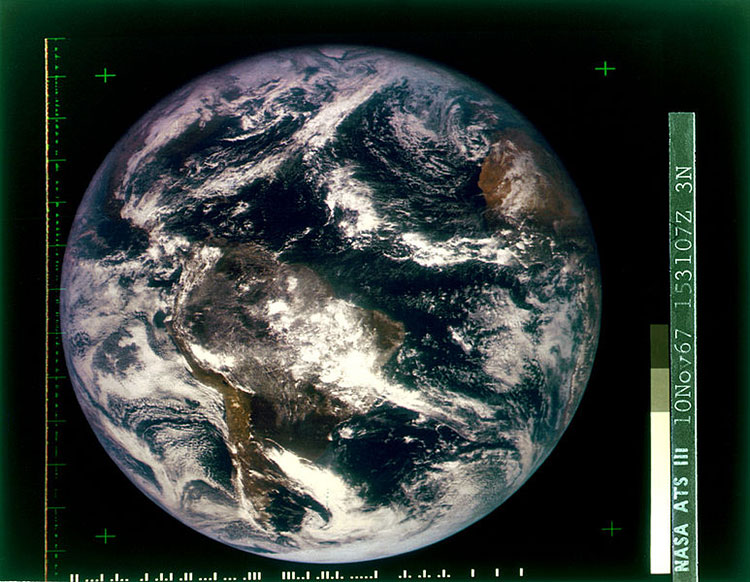
 最初の"青いビー玉"の写真は2回目の物よりもさほど覚えられていませんが、それでも一見の価値があります。
The first “Blue Marble” shot isn’t quite as well remembered as the second one, but still rates a mention.


 この始めての地球全体を写したカラー写真は1967年の11月にNASAの気象衛星ATS-3によって撮影されました。この衛星はあまり馴染みの無い名前ですが、実は2001年に退職書をもらうまで三十年もの間静止軌道していました。
This first color photograph of the entire Earth was taken in November 1967, by the experimental NASA communications and weather satellite ATS-3. While the satellite isn’t a household name, it kept on trucking in its geosynchronous orbit for more than three decades before receiving its retirement papers in 2001.
 依然としてATS-3は写真を撮った星の周りを回っていますが、もう静かなスペースデブリのひとつなのです。
Most likely ATS-3 remains circling the planet it photographed, another silent piece of space debris.
世界を変えた青いビー玉写真

The Blue Marble Photo That Changed the World


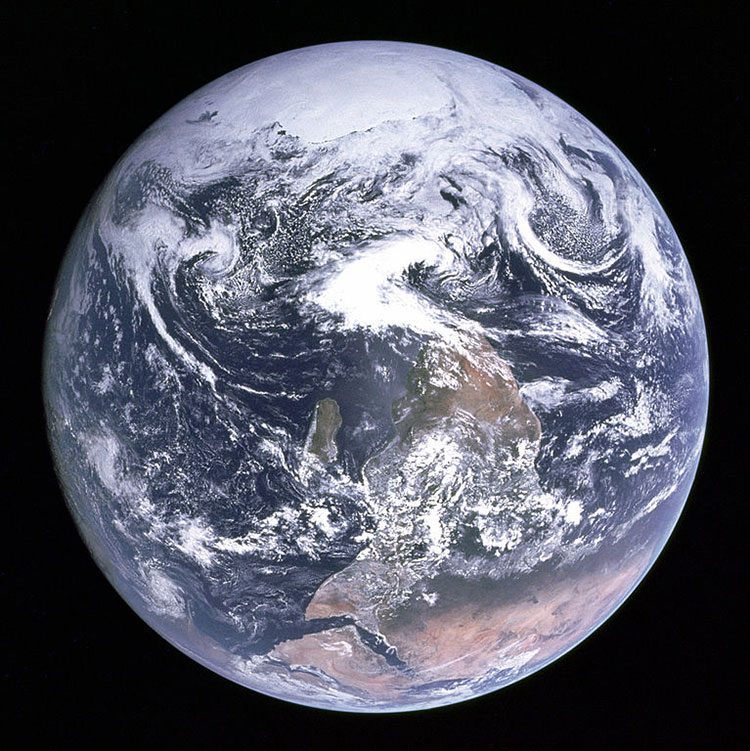
 最も注目を集め、そして一番敬愛され祀られているこの青いビー玉の写真は1972年にアポロ17号の宇宙飛行士が撮影されました。(メモ:これは南半球が上にきている正真正銘のオリジナルの写真です。NASAは公表の際特定の文化的規範にそって写真を逆転させました。)。これよりもよく知られる写真は他にありません。
But it was this 1972 photograph of Earth taken by the Apollo 17 astronauts that garnered the most notice and is forever enshrined as the best-loved “Blue Marble” photo. (Note: we’re showing the true original photograph, with the South Pole on top. For publishing, NASA reversed the image to conform to certain cultural norms.) What might be less well known is that the picture almost never was.
 「彼らは写真を撮ってはいけなかったんだと思います。」とアポロ13号の映画の脚本を共同執筆した映画監督のアル・レイナートは2011年のアトランティック誌に記載しています。「写真撮影は厳格に厳密に成功のために練られた飛行プランでの中に予定されたイベントでした。フィルム自体も危険を伴う飛行のために厳密に配給されていました。23の雑誌社は70mmハッセルブラドのカメラと12本のカラーフィルムと11本の白黒フィルムを搭載し、すべて記録のために計画されたものばかりでした。彼らは窓の外を眺めるのもいけなかったんだと思います。」
“They weren’t supposed to be taking pictures,” film director Al Reinert—who also co-wrote the screenplay for the film Apollo 13wrote in the Atlantic in 2011. “Photo sessions were scheduled events in a rigorous flight plan that detailed every step essential to success. The film itself was strictly rationed like everything else on those perilous flights; there were 23 magazines onboard for the 70mm Hasselblad cameras, twelve color and eleven black-and-white, all intended for serious documentation purposes. They weren’t supposed to be looking out the window, either.”
 しかし、誰かがそれをやってしまったのだ。実際いまだにどのアポロ17号の船員がこの写真を撮ったかという議論は続いており、NASAは三人の船員の名前を撮影者として記載している。1972年の青いビー玉の更に心打たれる事実は、このアポロ17号以来、誰もここまでの遠さから同じような地球の写真を収めていないということです。そしてこの写真は初めて人々が我々の惑星をこの明るさで見た機会であり、変革であったのです。以下はロジャー・ローニスがスミソニアン・航空宇宙博物館のブログからの引用です。
But someone did—there’s still controversy over which Apollo 17 crew member actually snapped the iconic shot, though NASA credits all three astronauts. The 1972 Blue Marble is all the more poignant for the fact that since Apollo 17, no human being has been far enough into space to capture a similar picture of Earth. And because this image was the first time people had the opportunity to see our planet in such a light, it was transformative. As Roger Launius put it in the Smithsonian’s Air Space blog:
 「この写真とその他の信じられない宇宙から撮影した地球の写真は、宇宙の中の私達の居る場所と考えさせられます。これは毎年アースデーを祝う期間に環境活動家、政治家、そして科学者のスローガンとなりました。彼らはこの写真から、地球は小さく、傷つきやすく、孤独で、そして命が終結するこの繊細な星は、鈍く、暗く、閑散とした空間にある物として扱いました。」
“This image, and the other stunning photographs of the Earth taken from space, inspired a reconsideration of our place in the universe.  It became the rallying cry of environmental activists, politicians, and scientists during the annual Earth Day celebrations. They used it as an object lesson of the Earth as a small, vulnerable, lonely, and fragile body teeming with life in a dull, black, lifeless void. While self-regulating and ancient, humanity proved a threat to this place.”


2002年から2012年の青いビー玉

The Blue Marbles from 2002 and 2012

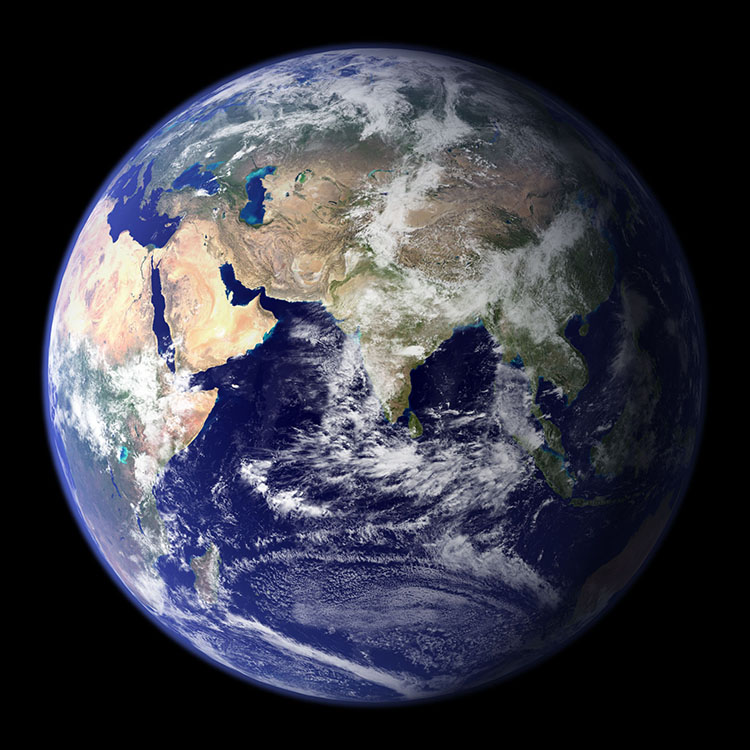
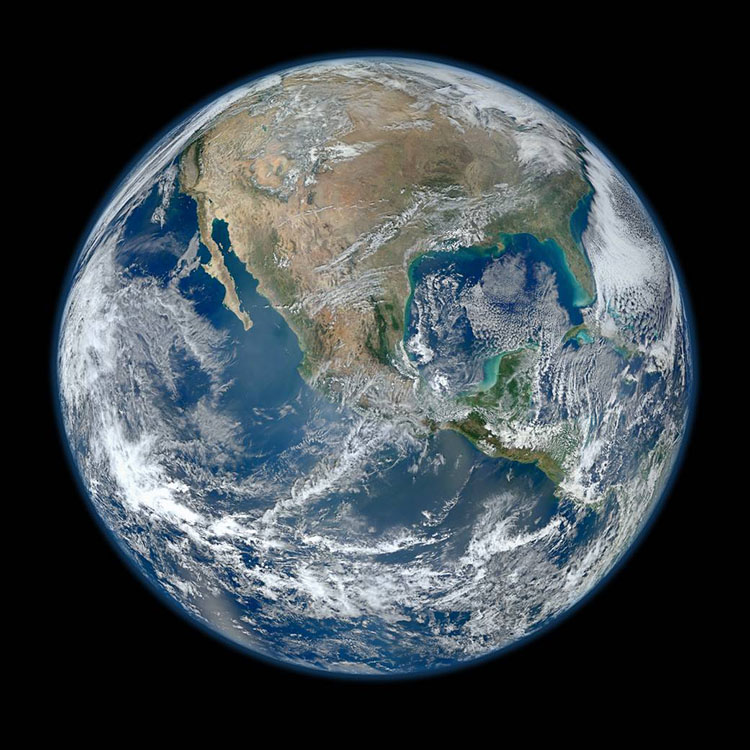
 画像ソフトの開発により、NASAは地球の近くから撮影されたイメージをもとに新しい青いビー玉像を作り上げる方法を見つけました。2002年、機関はこの上にある最も詳細なイメージを公開しました。これは主にTerra衛星に搭載されたMODISから、何ヶ月にも渡って収集されたイメージを合成したビー玉です。
As imaging software improved, NASA found ways to create new Blue Marbles from photographs taken closer to the planet. In 2002, the agency released the above photograph, the most detailed “Blue Marble” at the time—albeit a composite marble made from months of satellite observations, mostly from the MODIS instrument aboard the Terra satellite.


 2012年、NASAはSuomi NPP衛星から観測結果を縫い合わせるように作成した合成イメージを発表しました。
In 2012, NASA released another composite image, made by stitching together observations from the satellite Suomi NPP.


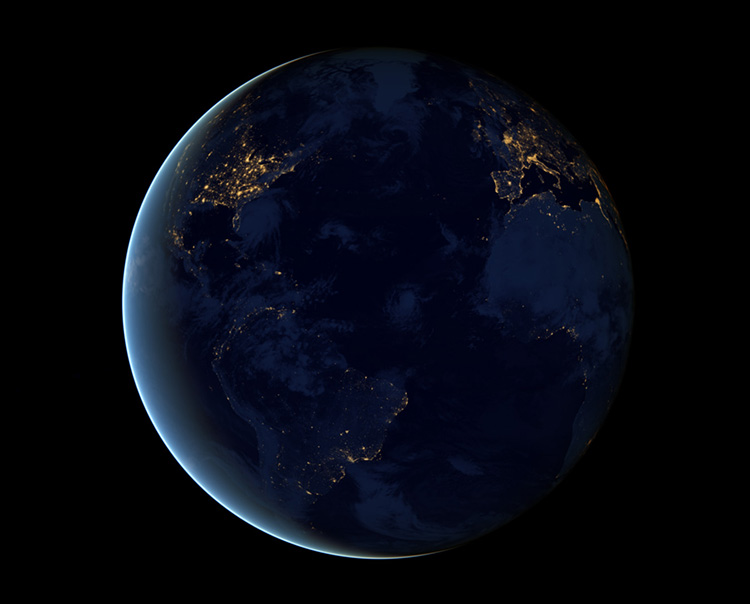
 また2012年にNASAはSuomiの夜間の地球の観測結果を用い、息を呑むような青いビー玉ならぬ、"黒いビー玉"を作成しました。この上の写真は22日間で地球を312周して作成されました。
Also in 2012, NASA used Suomi’s observations of Earth’s night side to take a breathtaking companion photo to the Blue Marble, the “Black Marble.” The above photo was made from images taken over 22 days and 312 trips around Earth.


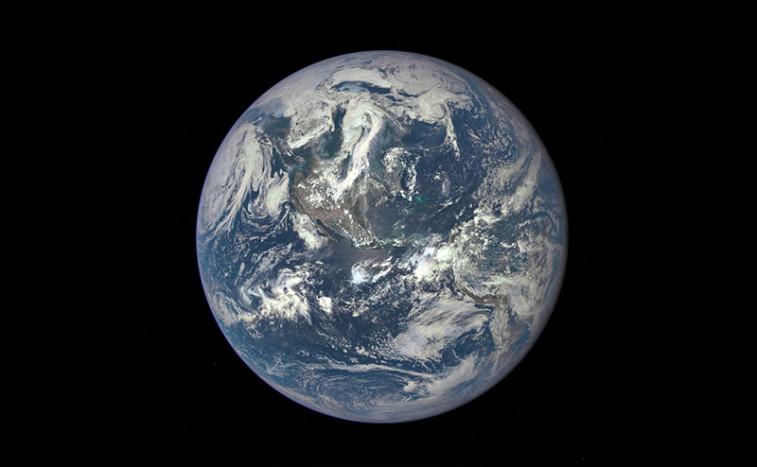
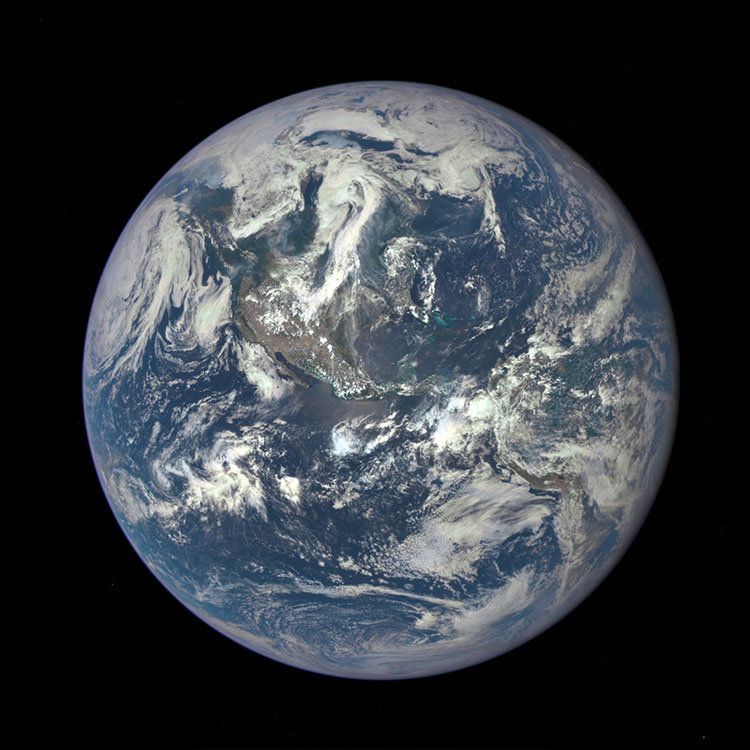
 今年、the Deep Space Climate Observatory (DSCOVR) 衛星は自らのカメラにふさわしくもEPIC(大作)と名付け(でも本当にEarth Polychromatic Imaging Cameraの略式です。)、地球にふりむいて最新の"青いビー玉"を撮影しました。そして、もっとそのイメージが届くでしょう。DSCOVERはラグランジュL1点*から太陽風を観測をしていますが、多様な我々の惑星の日常の写真を毎日撮り続けています。もうすぐ私達は感心な袋いっぱいの青いビー玉を受け取るでしょう。
This year, the Deep Space Climate Observatory (DSCOVR) satellite aimed its camera, appropriately named EPIC (but really standing for Earth Polychromatic Imaging Camera), back at Earth to capture the most recent true “Blue Marble” shot. And there’s more to come, too. DSCOVR is hanging out at the L1 Lagrangian Point to monitor the solar wind, but will continue to take daily images of Earth that will show daily variations of our planet. Soon, we’ll have a veritable bagful of Blue Marbles to admire.
Image: NASA
ラグランジュ点*とは太陽と地球の間で引力を利用し、安定した起動を得られる地点のことです。

2015/07/29

なぜこの14歳の少年は核融合炉を作ったのか 後編